
You qualified for up to $7,634 per child. Now what?
The 2026–2027 application is closed. Check the SCDE program page for current application details.
South Carolina's Education Scholarship Trust Fund is one of the largest school-choice scholarships in the country — and one of the most confusing to actually use. The application has three windows with different eligibility rules. The digital wallet rejects purchases for formatting mistakes you didn't know existed. And the legal distinction between ESTF participation and statutory homeschooling trips up families every single year.
The 2026–2027 Participant Guide is 10 pages, with additional information in SCDE FAQs and ClassWallet materials — and none of them give you a step-by-step workflow for getting from application to renewal without a rejected order or a missed deadline along the way.
The ESTF Compliance Navigator
This guide is a single-document operating system for every stage of ESTF participation. It consolidates the scattered rules from SCDE handbooks, ClassWallet policies, and state statute into one chronological workflow — so you spend your time educating your child, not decoding policy documents.
Built for the 2026–2027 program year with that year's figures, income thresholds, and capacity. Legal requirements include statutory citations so you can verify them yourself.
What's inside
- Eligibility decision tree — Walk through income limits (expanding to 500% FPL for 2026–2027), residency requirements, and education pathway rules to confirm your child qualifies before you start the application.
- Application timeline with priority windows — Windows 1, 2, and 3 mapped out with document checklists for each, so nothing holds up your submission.
- ClassWallet spending compliance guide — Every approved expense category with its spending cap, the biennial hardware rule explained across a multi-year cycle, standalone invoice requirements for transportation, and the item-description standards that prevent rejected orders.
- Pre-submission invoice checklist — Run each ClassWallet purchase through this checklist before you submit. It catches the formatting, bundling, and category-cap errors that trigger rejections — because a denied order means waiting weeks, not minutes, for a fix.
- Legal status explainer — The difference between ESTF's "educate at home" pathway under §59-8-115(H) and statutory homeschooling under Options 1, 2, and 3 — and exactly what to do if you're currently enrolled in a homeschool association and need to withdraw.
- Annual testing and renewal workflow — Annual assessment requirements by grade, how to submit score reports to SCDE, and the full renewal sequence so you keep your scholarship year after year.
- Quarterly budget planner — Track each $1,908.50 quarterly disbursement against your spending plan, with category subtotals for tuition, curriculum, therapy, technology, and transportation.
- Legislative timeline — From Act 8 of 2023 through the Eidson ruling and 2025 Act No. 11, understand where the current rules came from and what to watch for in future sessions.
Who this is for
- First-time applicants who need to know whether their family qualifies, what documents to gather, and how to submit a complete application during the right priority window.
- Option 1, 2, or 3 homeschoolers considering ESTF who need to understand the legal implications of switching — including association withdrawal, compulsory attendance, and what changes about your curriculum choices.
- Current ESTF participants managing ClassWallet purchases, navigating the initial technology hold, and filing testing reports on time.
- Families using ESTF for private school tuition, therapy services, or out-of-district transfers who need category-specific spending guidance and invoice formatting rules.
Why not just use the free handbook?
The SCDE handbook and ClassWallet help desk are free, and they're the authoritative source for program rules. This guide doesn't replace them — it reorganizes them.
The official materials tell you what the rules are. They don't tell you when to do each step, in what order, or how to avoid the specific formatting and documentation mistakes that cause order rejections and processing delays. They don't give you a budget tracker, an invoice compliance checklist, or a withdrawal template.
This guide takes hundreds of pages of scattered policy documents and turns them into a single workflow you can follow from application day to renewal day — with source references to help you check whether the information is current.
Satisfaction guarantee
If the guide doesn't help you navigate the ESTF process more confidently, email [email protected] for a full refund, no time limit. We read every message.
Start with the free checklist
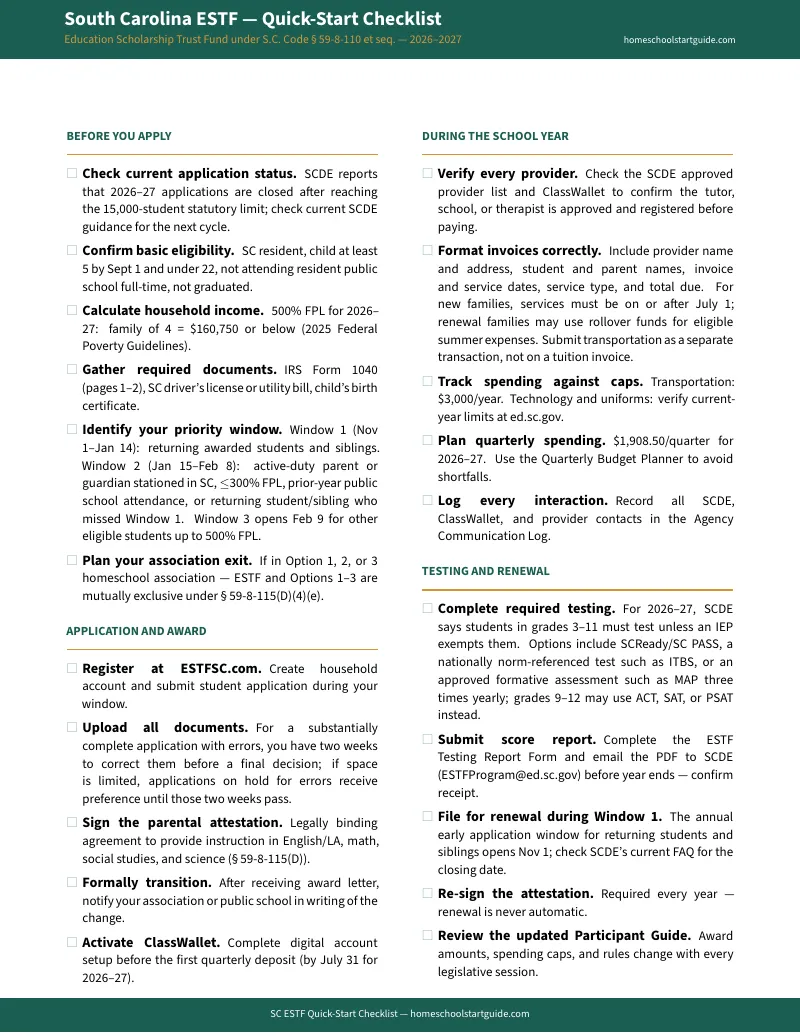
Not ready for the full guide? Download the free South Carolina ESTF Quick-Start Checklist — a two-page eligibility and application checklist you can use tonight. If you decide you need the full workflow later, the guide will be here.
Frequently Asked Questions
What if the rules change after I buy?
We update the guide when the rules change. Email us any time, even years later, and we'll send you the current edition free.